Last Updated: August 2026
A damp basement can create more problems than an unpleasant musty smell. Excess humidity may contribute to condensation, mold and mildew growth, damaged belongings, and an uncomfortable indoor environment.
The challenge is that basements and large enclosed spaces often need more than a small portable dehumidifier. These areas may have limited airflow, cooler temperatures, moisture entering through foundation walls, or persistent humidity that requires long-term control.
Choosing the right dehumidifier is therefore not simply about buying the largest unit available. Coverage, moisture-removal capacity, drainage options, operating temperature, maintenance requirements, and the severity of the moisture problem all matter.
This guide explains what to look for when choosing a dehumidifier for a basement, crawl space, or other large area—and how to decide which type of system best suits your home.
Quick Answer
The best dehumidifier for a basement or large space should match the size and moisture level of the area while providing a practical drainage solution.
For a finished basement with moderate humidity, a high-capacity portable dehumidifier may be enough. For a crawl space or an enclosed area with persistent moisture, a purpose-built unit with continuous drainage and low-temperature protection may be a better long-term option.
Why Basements Need a Different Type of Dehumidifier
Basements are naturally more vulnerable to moisture than many other areas of the home.
Because they are surrounded by soil, basement walls and floors may remain cooler and can be exposed to moisture from the ground. Limited ventilation may also allow humid air to remain trapped for longer periods.
A small dehumidifier may work in a mildly damp room, but it can struggle when the space is large, consistently humid, or affected by ongoing moisture.
The U.S. Environmental Protection Agency’s ENERGY STAR guidance recommends considering both the size of the area and its moisture conditions when selecting capacity. A very damp or wet space generally requires more moisture-removal capacity than a similarly sized area with only mild humidity.
Before buying, consider:
- The total square footage
- How damp the space feels
- Whether there are musty odors
- Whether walls or floors show condensation
- The average temperature of the basement
- Whether a floor drain or sump pump is available
- How often the unit will need to operate
What to Look for in a Basement Dehumidifier
1. Coverage and Moisture-Removal Capacity
Coverage ratings can provide a useful starting point, but they should not be the only factor.
A large basement with mild humidity may require less capacity than a smaller basement with visible dampness or water seepage.
Dehumidifier capacity is generally measured by the amount of moisture a unit can remove within 24 hours. However, newer ratings may appear lower than older ones because U.S. testing standards changed to use cooler conditions that more closely resemble basement environments.
When comparing models, look at both:
- The manufacturer’s recommended coverage area
- The unit’s moisture-removal capacity
If your basement remains consistently damp, choosing a unit with some additional capacity may be more effective than selecting the minimum recommended size.
2. Continuous Drainage
Drainage is one of the most important considerations for large or difficult-to-access spaces.
Many portable dehumidifiers collect water in an internal bucket. While this is convenient for occasional use, the bucket may need frequent emptying in a damp basement.
A continuous-drain setup allows collected water to leave through a connected hose, reducing routine maintenance. Some models also include a built-in pump that can move water to a higher drain or sink when gravity drainage is not possible.
For a crawl space or an area that is difficult to access, continuous drainage can be much more practical than relying on a water bucket.
3. Automatic Defrost
Basements and crawl spaces can remain cool throughout the year.
At lower temperatures, frost may develop on the internal coils of some compressor-based dehumidifiers. This can reduce performance and interrupt moisture removal.
An automatic defrost system helps manage frost buildup and may be especially useful in unfinished basements, garages, and crawl spaces.
ENERGY STAR advises considering a unit designed for lower-temperature operation when the space regularly falls below approximately 65°F.
4. Humidity Controls
A built-in humidistat allows the dehumidifier to monitor the humidity level and operate according to a selected target.
This is more convenient than manually turning the unit on and off. Once the desired humidity level is reached, the system can cycle as needed to maintain it.
For many homes, maintaining indoor relative humidity between 30% and 50% is generally considered a healthy target range.
5. Energy Efficiency
A dehumidifier may operate for many hours during humid weather, so energy use should be part of the buying decision.
ENERGY STAR-certified dehumidifiers are designed to remove moisture more efficiently than comparable conventional models. However, efficiency should be considered alongside capacity and suitability for the environment.
An undersized unit that runs continuously without reaching the desired humidity level may not provide the best long-term value.
Looking for reliable humidity control for a crawl space or basement?
👉 Explore the Argendon Shield 35M
Best Dehumidifier Types for Different Spaces
There is no single dehumidifier that is ideal for every basement.
The right option depends on how the space is used and how severe the moisture problem is.
Best for Finished Basements: High-Capacity Portable Dehumidifiers
A finished basement used as a living room, office, or entertainment area may benefit from a portable residential unit.
These models often offer:
- Adjustable humidity settings
- Multiple fan speeds
- Easy mobility
- Automatic shutoff
- Optional hose drainage
- Smart controls on selected models
Noise can be an important consideration in finished spaces because the unit may operate close to people.
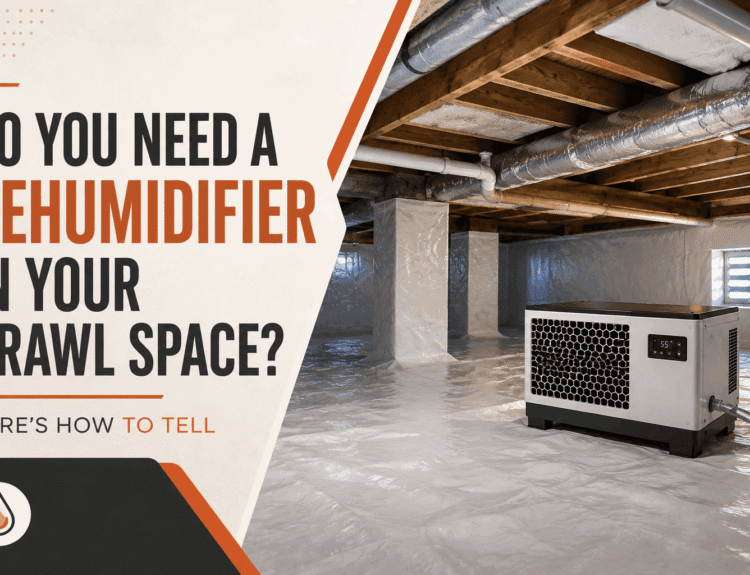
Best for Crawl Spaces: Purpose-Built Dehumidifiers
Crawl spaces present different challenges.
They are often difficult to access, may remain cool, and may not be suitable for a unit that requires regular bucket emptying.
A crawl-space dehumidifier should ideally provide:
- Continuous drainage
- Reliable long-term operation
- Suitable coverage
- Automatic defrost
- A compact design
- Low-maintenance operation
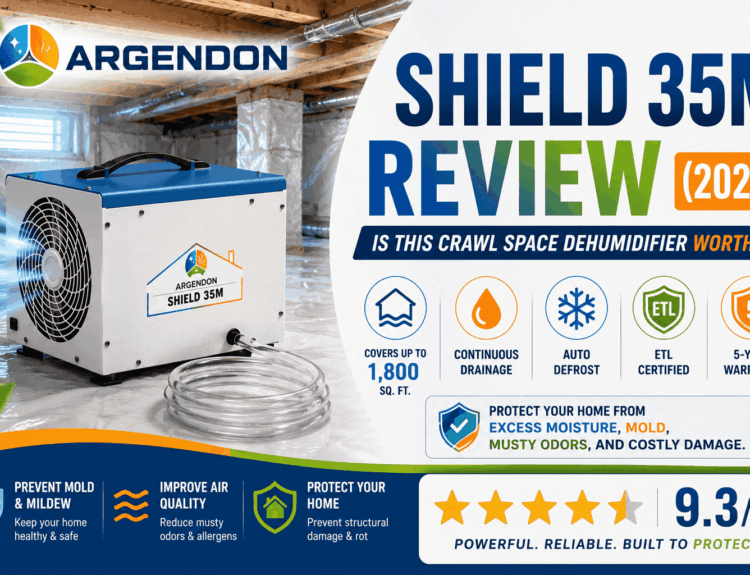
One option designed for this type of environment is the Argendon Shield 35M.
According to Argendon, the Shield 35M is designed for crawl spaces, basements, and other enclosed moisture-prone areas. It covers spaces up to 1,800 square feet and includes continuous drainage, automatic defrost, ETL certification, and a 5-year limited warranty.
Its feature set makes it relevant for homeowners who need ongoing moisture control rather than a portable unit for occasional use.
Best for Very Large or Commercial Areas: High-Capacity Systems
Large commercial buildings, warehouses, industrial spaces, and major water-damage restoration projects may require equipment with significantly greater capacity.
These systems are generally selected based on professional moisture assessments and may require specialized installation.
For these applications, a standard residential dehumidifier may not provide enough moisture-removal power.
Argendon Shield 35M: A Practical Option for Crawl Spaces
The Argendon Shield 35M is not designed to be a general-purpose appliance for bedrooms or small living areas.
Its purpose is more specific: controlling humidity in crawl spaces, basements, and enclosed areas where moisture can become a long-term concern.
The features that stand out include:
- Coverage for spaces up to 1,800 sq. ft.
- Continuous drainage
- Automatic defrost
- Industrial-grade performance
- ETL certification
- 5-year limited warranty
The continuous-drain design is particularly useful for crawl spaces because it reduces the need to access the unit regularly.
Automatic defrost can also support more reliable operation in cooler environments where frost may affect standard dehumidifiers.
For homeowners with persistent crawl-space moisture, the Shield 35M is worth considering as a specialized option rather than simply choosing a standard portable model.
See whether the Shield 35M is suitable for your space.
How to Choose the Right Size
Use the following questions before making a decision.
How large is the area?
Measure the total square footage. If the basement contains separate rooms, consider whether airflow can move freely between them.
How severe is the humidity?
A mildly damp basement may only require moderate capacity. A space with persistent condensation, wet walls, or visible seepage may need a more powerful system.
Is the space finished or unfinished?
A finished basement may require quieter operation and convenient controls. An unfinished basement or crawl space may prioritize drainage, durability, and low maintenance.
Is a drain available?
If there is a floor drain or sump pump nearby, a hose-based continuous-drain setup may be practical.
If drainage is not available, consider a model with a built-in pump or be prepared to empty the water tank regularly.
How cool does the space become?
Cooler environments may require automatic defrost or equipment specifically designed for lower-temperature operation.
Is there an active water problem?
A dehumidifier removes moisture from the air, but it does not repair foundation leaks, plumbing problems, flooding, or major water intrusion. Those issues should be addressed separately.
Who Should Consider a Crawl-Space Dehumidifier?
A purpose-built crawl-space unit may be suitable for:
- Homeowners with persistent crawl-space humidity
- Homes in humid climates
- Properties with musty odors beneath the home
- Homes with moisture-prone basements
- Vacation properties that remain unoccupied
- Homeowners who want continuous drainage
- People looking for a low-maintenance humidity-control solution
Who May Need a Different Option?
A crawl-space dehumidifier may not be necessary if:
- You only need to control humidity in one bedroom
- The area is small and only mildly damp
- You want to move the unit between rooms
- Quiet operation is a top priority
- The space is regularly occupied and would benefit from smart controls
In these situations, a portable residential dehumidifier may be a better fit.
Frequently Asked Questions
What is the best dehumidifier for a large basement?
The best option depends on the basement’s size, humidity level, temperature, and drainage setup. Large or very damp basements generally require greater moisture-removal capacity than smaller spaces with mild humidity.
What size dehumidifier do I need for a basement?
Start with the square footage, then consider how damp the area is. A very damp basement generally needs more capacity than a similarly sized space with only occasional humidity.
Is a crawl-space dehumidifier different from a regular dehumidifier?
Yes. Crawl-space models are typically designed for continuous operation, difficult-to-access locations, dedicated drainage, and long-term humidity control.
Do basement dehumidifiers need a drain?
Not always. Many units use removable water buckets. However, continuous drainage or a built-in pump can reduce maintenance significantly.
What humidity level should a basement have?
A relative humidity level between 30% and 50% is generally considered a healthy range for buildings.
Can a dehumidifier prevent mold?
A dehumidifier can reduce excess humidity that may support mold growth, but it cannot remove existing mold or repair active water leaks.
Is the Argendon Shield 35M suitable for crawl spaces?
Yes. The Shield 35M is designed for crawl spaces, basements, and enclosed moisture-prone areas. Argendon lists coverage of up to 1,800 square feet, along with continuous drainage and automatic defrost.
Does the Argendon Shield 35M require manual bucket emptying?
The Shield 35M uses a continuous-drain setup, reducing the need for routine bucket emptying when installed with appropriate drainage.
Final Recommendation
The best dehumidifier for a basement or large space is the one that matches the conditions of the area.
A finished basement with moderate humidity may only need a high-capacity portable model. A crawl space or unfinished basement with persistent moisture may benefit from a purpose-built system with continuous drainage and automatic defrost.
The Argendon Shield 35M is a relevant option for homeowners looking for specialized crawl-space or basement humidity control. Its coverage of up to 1,800 square feet, continuous drainage, automatic defrost, ETL certification, and 5-year limited warranty make it suitable for long-term moisture management.
However, a dehumidifier should be part of a broader moisture-control plan. Active leaks, flooding, poor exterior drainage, and major foundation problems should be repaired rather than treated only with a dehumidifier.
Overall Buying Guide Summary
| Buying Factor | Importance |
|---|---|
| Correct Capacity | ⭐⭐⭐⭐⭐ |
| Continuous Drainage | ⭐⭐⭐⭐⭐ |
| Suitable Coverage | ⭐⭐⭐⭐⭐ |
| Automatic Defrost | ⭐⭐⭐⭐☆ |
| Energy Efficiency | ⭐⭐⭐⭐☆ |
| Warranty and Reliability | ⭐⭐⭐⭐⭐ |